Preview
Breakdown
Animation Design Study
Folding patterns are built from layered base sequences—starting with a single-layer motion that is duplicated and scaled to generate complexity.
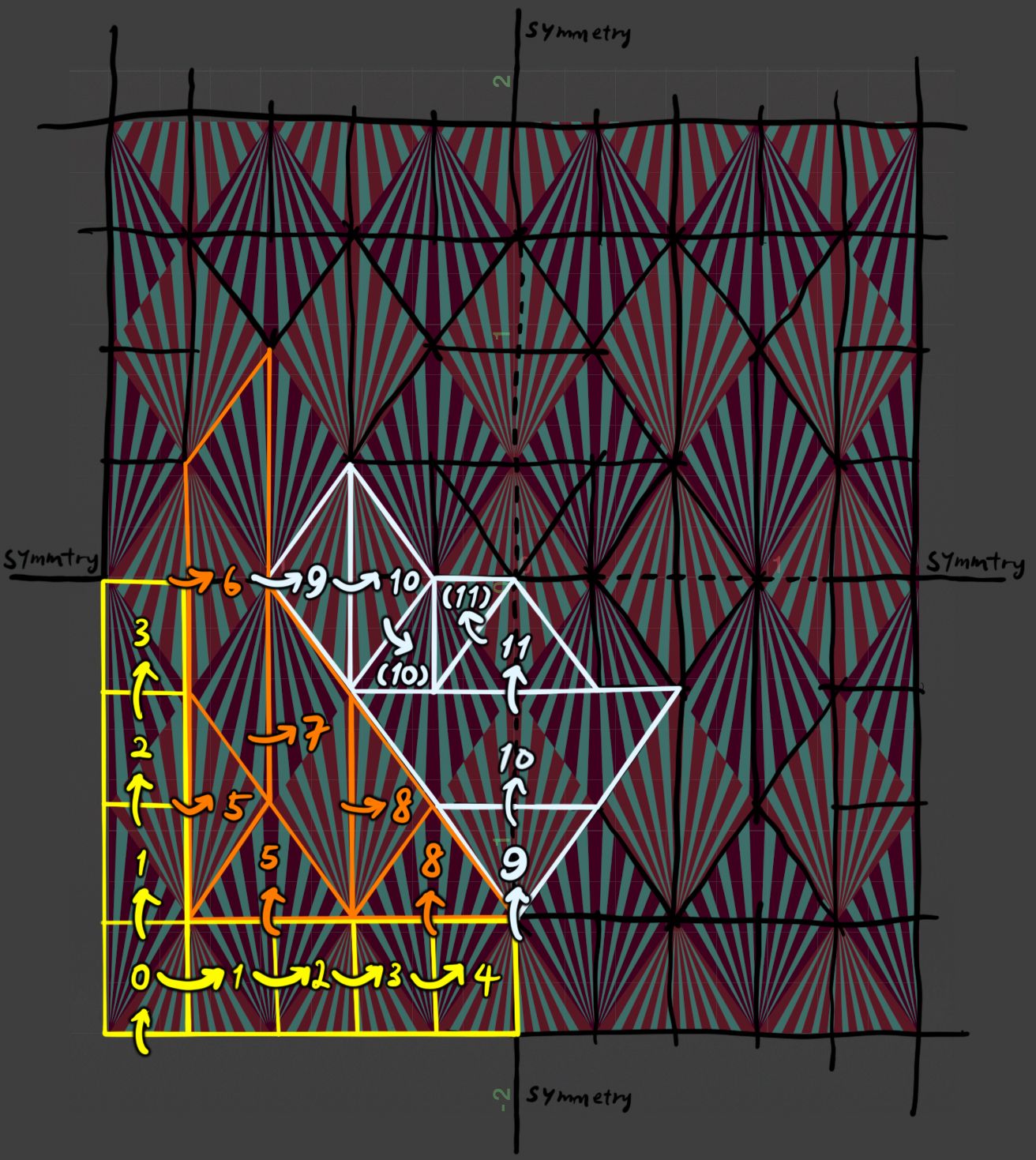
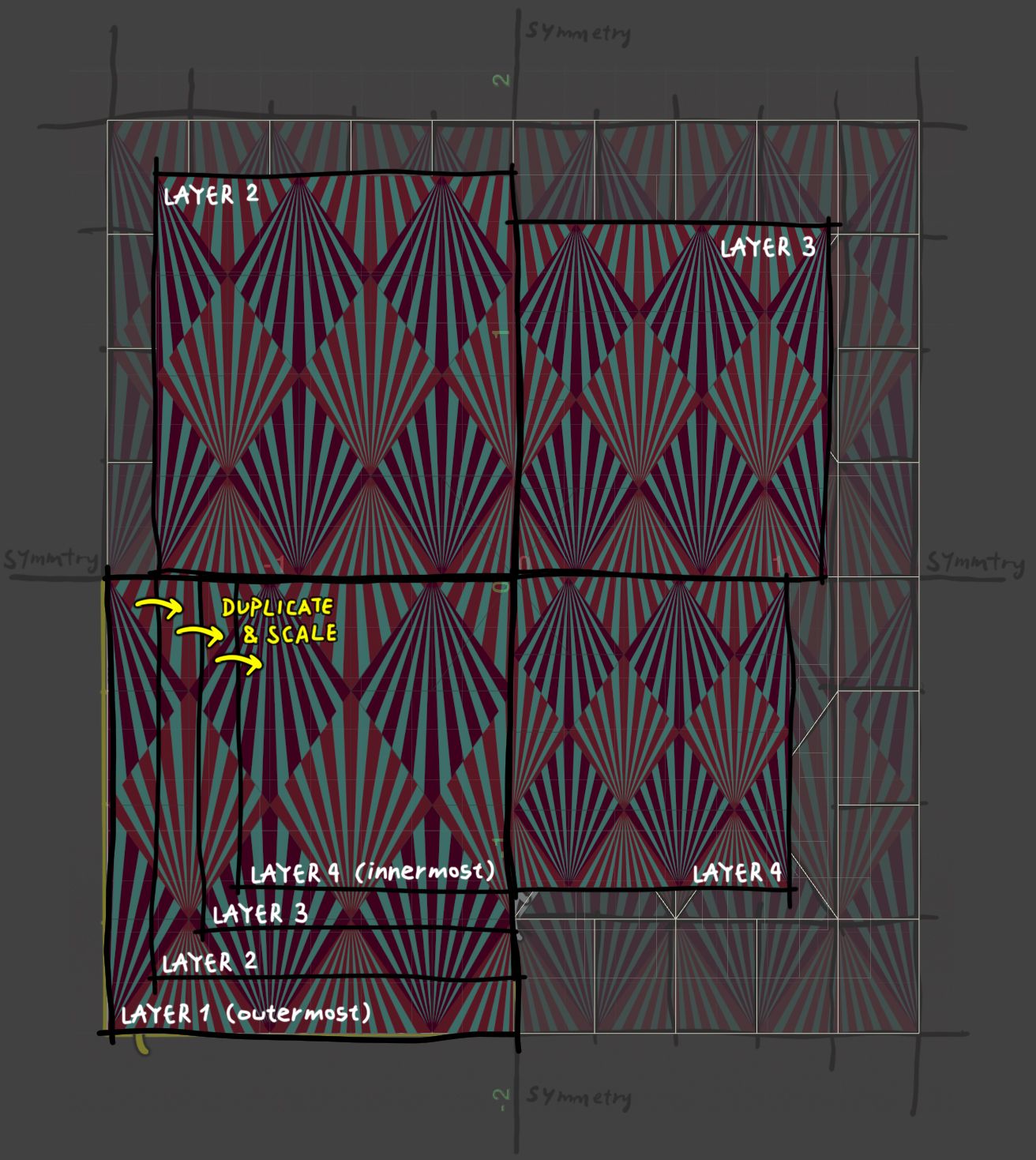
Procedural Animation
Transitioned from manual keyframing to a procedural Houdini pipeline for greater flexibility. This setup enables rapid iteration on folding variations and allows for asset swapping without re-shattering geometry.
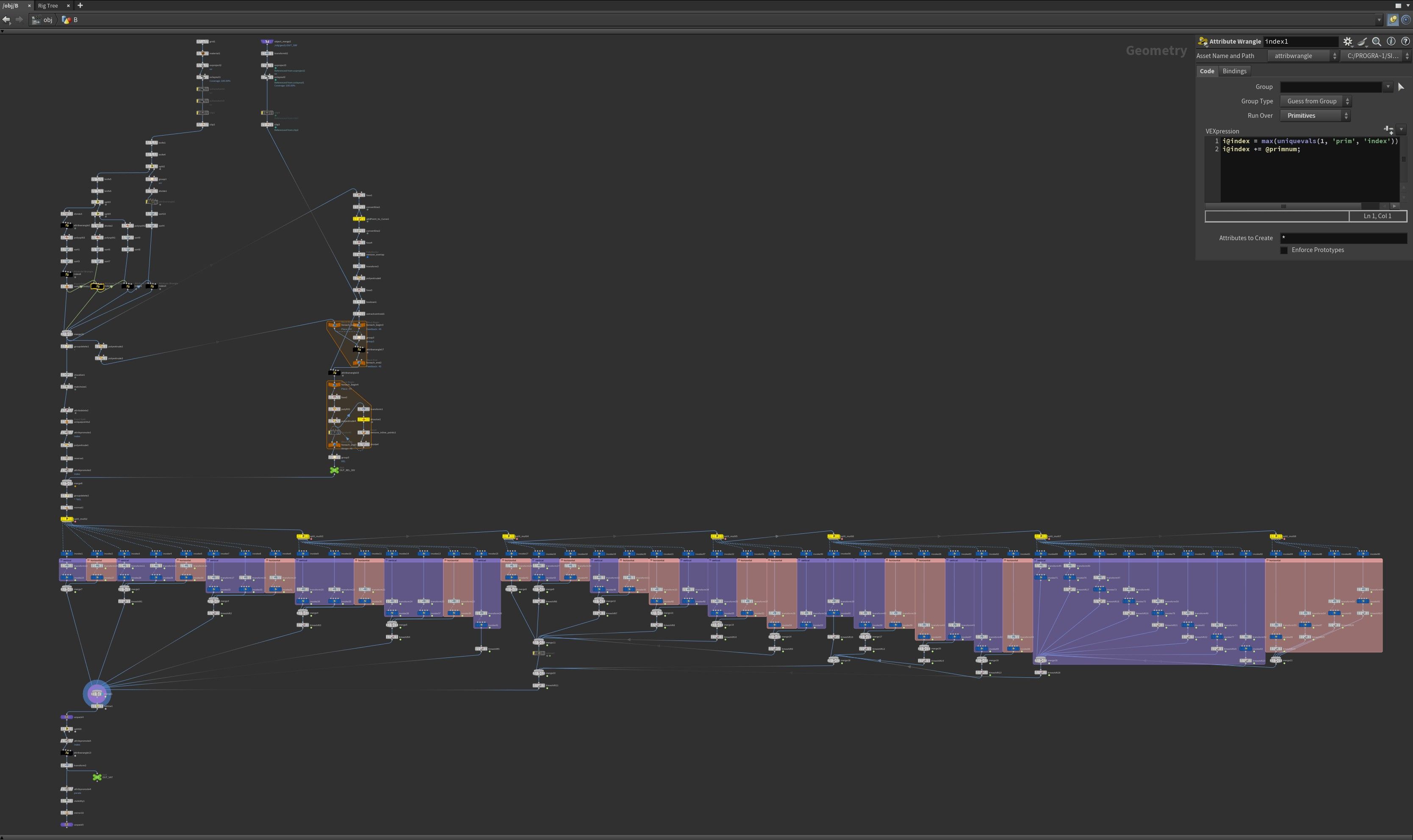
The final sequence was baked into Vertex Animation Textures (VAT) to maintain high-performance rigid-body motion within game engine.
VAT Texture Baking
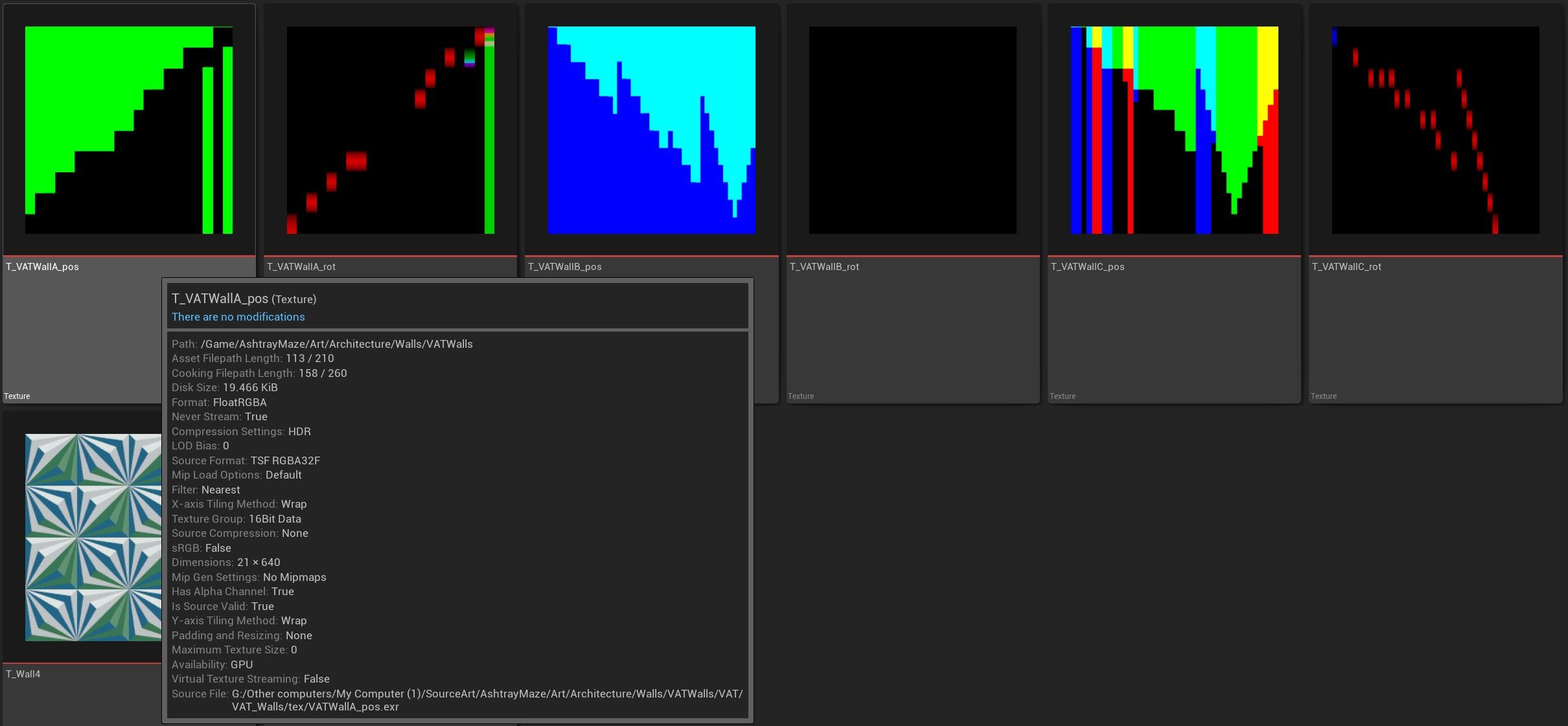
To optimize texture footprint, only a symmetrical quarter (21 pieces) was processed. Data mapping:
- U Axis: Per-piece indexing (21 total).
- V Axis: Temporal frames (640 total).
- Position Map: RGB for world-space coordinates; Alpha for animation state.
- Rotation Map: RGB for Euler rotations; Alpha for per-piece sequence offsets.
Blueprint Interaction & Collision Sync
Since VAT-driven motion resides purely in the shader, physical interaction required a function to sync the collision transformations.
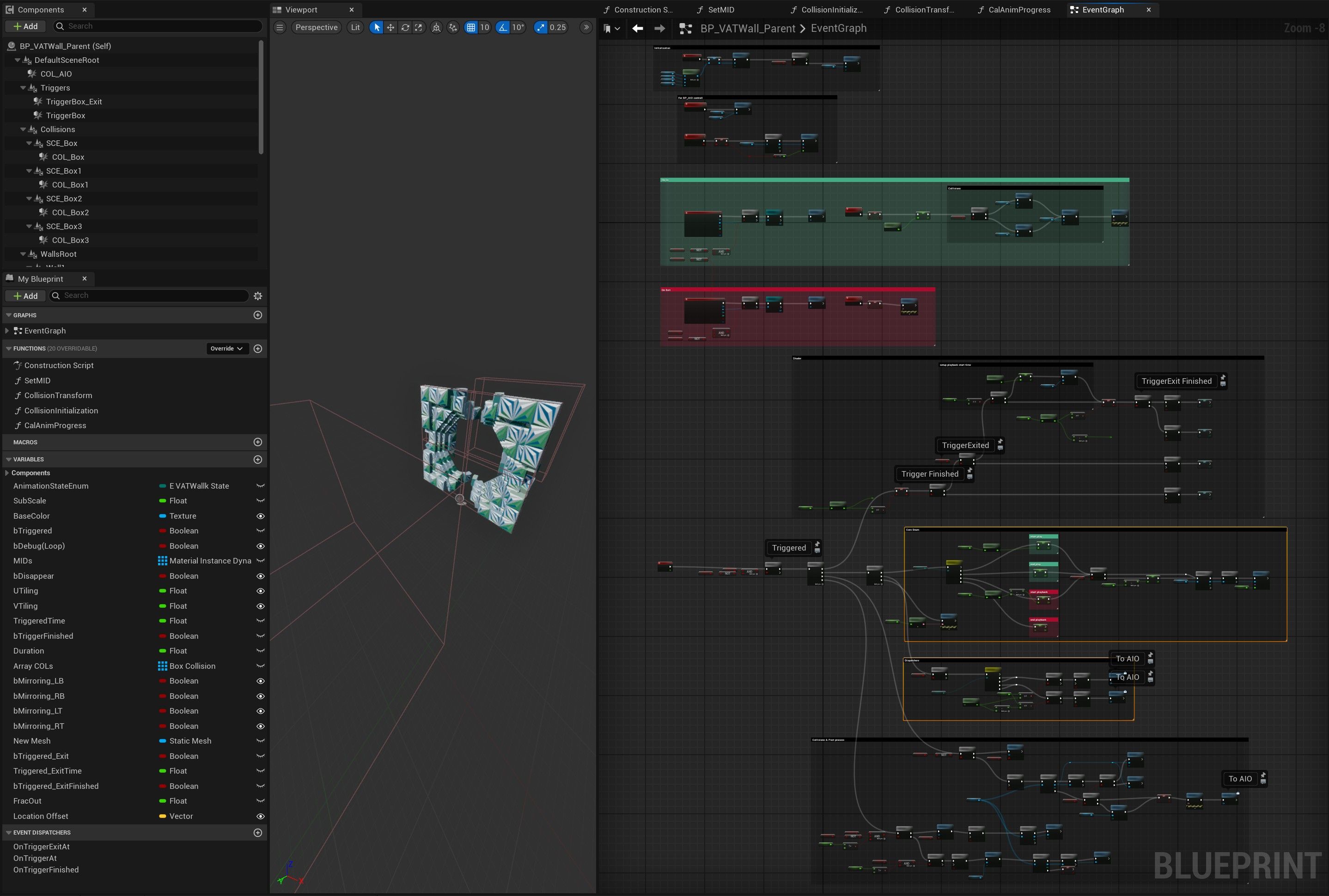
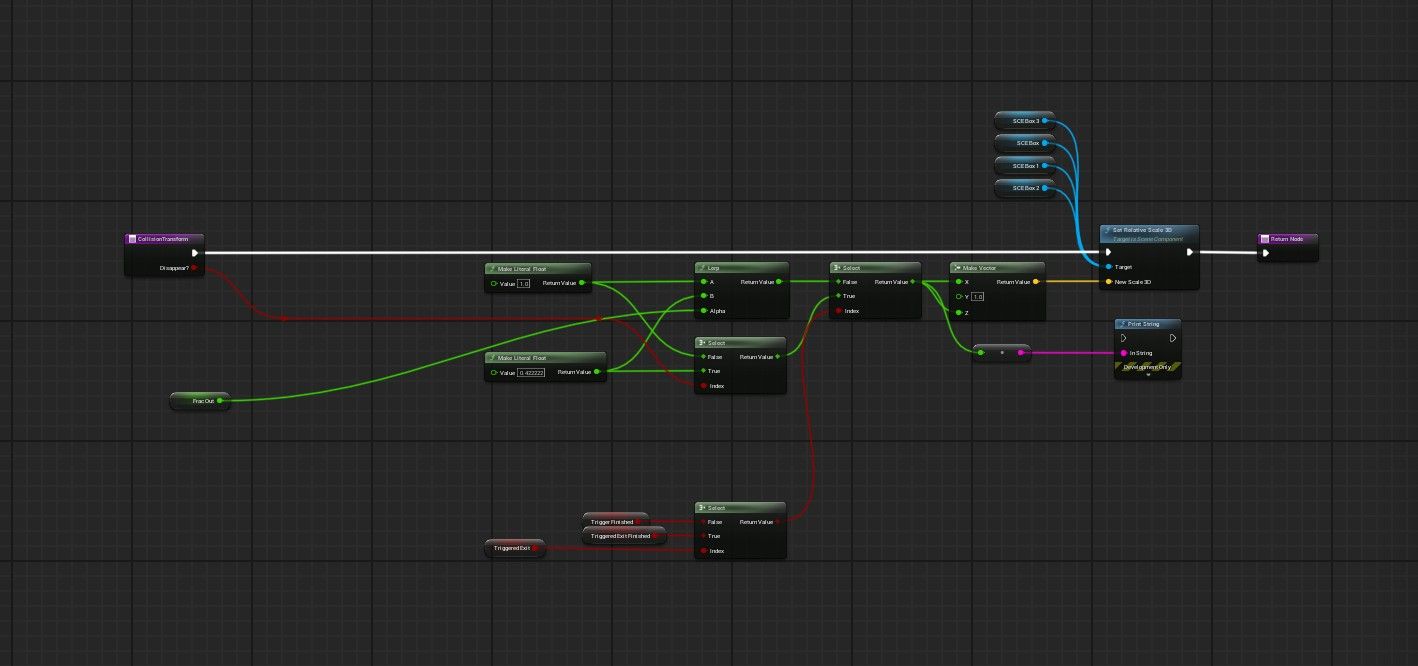
A virtual function in the parent class handles the core transform logic, overridden in child Blueprints for specific wall variants. The system also includes Z-scale inversion logic to ensure the detailed facade remains oriented toward the player after passage.